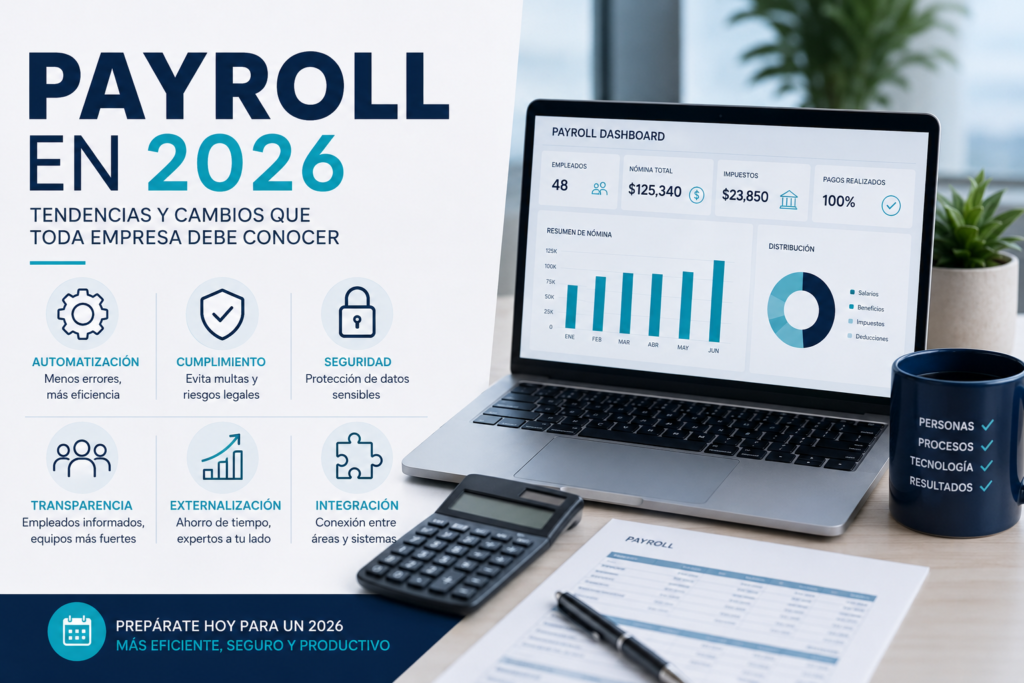
Payroll has evolved far beyond calculating wages and issuing paychecks. In 2026, businesses face an increasingly complex environment where compliance, technology, data security, and employee experience all play a critical role in maintaining an efficient and compliant operation.
Whether you’re a small business or a growing organization, staying ahead of payroll trends can help reduce risk, improve efficiency, and support long-term growth.
1. Payroll Automation Is No Longer Optional
Manual payroll processes are quickly becoming a thing of the past. Modern payroll software allows businesses to:
- Reduce payroll calculation errors
- Automate tax withholdings and deductions
- Process employee payments faster
- Generate real-time payroll reports
- Maintain organized records for audits and compliance
Automation not only improves accuracy but also allows business owners and HR teams to focus on strategic initiatives instead of repetitive administrative tasks.
2. Compliance Remains a Top Priority
Employment standards and tax regulations continue to evolve, making payroll compliance more important than ever.
Even small payroll mistakes can result in:
- Government penalties
- Interest on late remittances
- Compliance issues with tax authorities
- Employee disputes and payroll corrections
Regular payroll reviews and accurate remittances help businesses remain compliant while minimizing unnecessary financial risks.
3. Payroll Data Security Matters More Than Ever
Payroll contains some of the most sensitive information within a business, including:
- Banking information
- Tax identification numbers
- Employee salaries
- Personal records
Protecting this information through secure payroll systems, restricted access, encrypted data, and regular backups is essential for maintaining employee trust and reducing cybersecurity risks.
4. Employees Expect Greater Payroll Transparency
Today’s workforce expects a clear understanding of how their pay is calculated.
Providing employees with accurate pay statements and clear explanations of deductions, benefits, and earnings helps:
- Reduce payroll-related questions
- Build employee trust
- Prevent misunderstandings
- Improve the overall employee experience
Transparency strengthens communication between employers and their teams.
5. Payroll Outsourcing Continues to Grow
Many small and medium-sized businesses are choosing to outsource payroll to experienced professionals.
Some of the biggest advantages include:
- Greater payroll accuracy
- Ongoing compliance with changing regulations
- Time savings for business owners
- Reduced administrative costs
- Access to payroll and tax specialists
Outsourcing allows companies to focus on growing their business while experienced professionals manage payroll responsibilities efficiently.
6. Integrated Business Systems Improve Efficiency
Payroll no longer operates independently. Integrating payroll with Human Resources, accounting, time tracking, and financial management systems helps businesses:
- Eliminate duplicate data entry
- Improve reporting accuracy
- Simplify administrative processes
- Support better business decision-making
A connected system creates smoother workflows across the organization.
Conclusion
Payroll is no longer just about paying employees on time. It has become a strategic business function that supports compliance, operational efficiency, employee satisfaction, and sustainable growth.
Investing in modern payroll processes and working with knowledgeable payroll professionals helps businesses reduce risk, improve productivity, and stay prepared for the future.